Business
Hedge fund billionaire Paul Tudor Jones says 2025 is ‘so much more potentially explosive than 1999’ because of the way bull markets always end

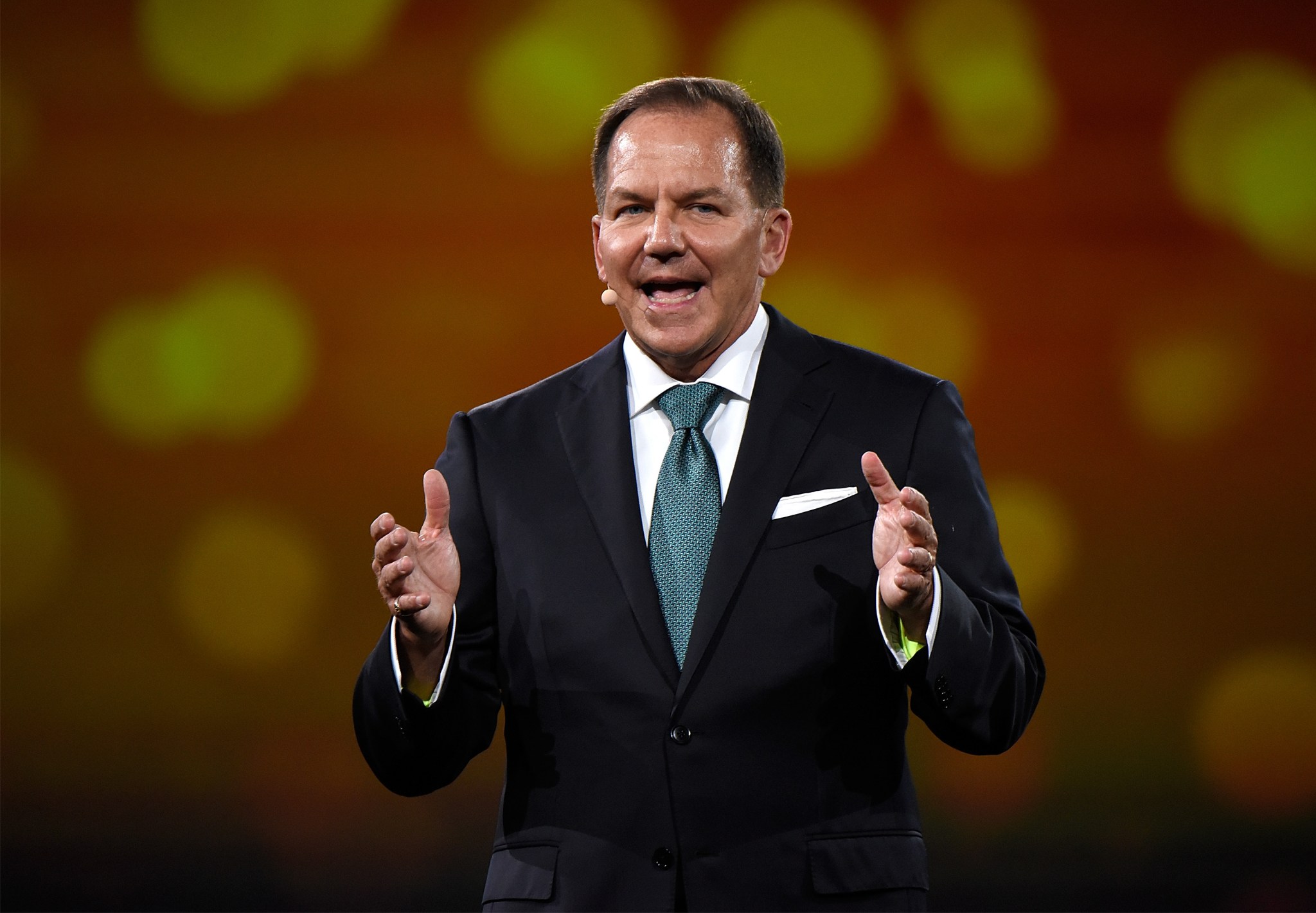
Hedge fund billionaire Paul Tudor Jones, founder and CIO of Tudor Investment Corporation, has raised alarms about the state of financial markets in 2025, drawing pointed comparisons to the explosive tech-driven boom of 1999, while clarifying that today’s environment could be “so much more potentially explosive.” The reason why has to do with what the market veteran knows about how bull markets always play out.
Speaking to Andrew Ross Sorkin of The New York Times‘ DealBook on CNBC’s Squawk Box ahead of the upcoming Robin Hood Foundation investor conference, Jones described today’s investment climate as uncannily similar to the one that preceded the 2000 dot-com bust.
“It feels exactly like 1999,” he said, implying that the market was acting like the famous Prince song with the lyrics: “Party Like It’s 1999.” He urged investors to position themselves like it’s October 1999, when the Nasdaq doubled in a matter of months before collapsing, a pattern Jones sees as increasingly plausible today. The difference is that this could be even worse than the dot-com bust, he said.
Jones told Sorkin his concerns had to do with investor behavior in every bull market, specifically at the end, when the cliff is nearing and nobody is sure where it is.
The stampede
Jones underscored that in every bull market, the “greatest price appreciation is always the 12 months preceding the top,” like what happened after October 1999. For investors, he said, the challenge is timing: “If you don’t play it, you’re missing out on the juice. If you do play it, you … have to have really happy feet because there will be a really, really bad end to it,” he said, seeming to refer to the American football phrase for when a quarterback is antsy and tiptoeing around the quarterback, rather than standing their ground.
“If anything, now is so much more potentially explosive than 1999,” Tudor Jones argued, citing the backdrop of the Federal Reserve cutting interest rates. He noted the Fed is set up for several rate cuts, with monetary policy taking the economy to a real interest rate of zero, meaning incentives to invest and spend given such a low cost of capital. In terms of fiscal policy, the Congress had a budget surplus in 1999 and today it has a 6% budget deficit. “That fiscal/monetary combination is a brew that we haven’t seen since, I guess the postwar period, early ’50s, something like that,” he said. “And that was crazy times, right? Coming out of the war.”
Still, Jones insisted he wasn’t calling a bubble or predicting a crash.
“I’m not suggesting that the train is going to crash,” he clarified. “I’m suggesting that we’re in a period that’s conducive for massive price appreciation in a variety of assets.”
The ‘Boldly Go’ Era: Fiscal Recklessness and AI
Where Jones did see a bubble was in sovereign debt, labeling government bonds the “biggest bubble,” with massive global deficits staved off, for now, by an ongoing easing cycle and anticipatory flows into fixed income.
“We’re kind of boldly going where no man has ever gone before,” he said, borrowing a Star Trek reference to capture the unprecedented mix of easy money and ballooning sovereign obligations. He foresees a reckoning when the current cycle of rate cuts ends and “all that demand has been pushed forward.”

When asked about the “circularity” of financing in the AI space, with Nvidia, OpenAI, AMD, Oracle, [hotlink]Microsoft,[/hotlink] and others all having somewhat interwoven data-center deals with each other, Jones agreed. “The circularity makes me nervous, I would say.” But he added that in broad terms, the way he thinks of it is the markets are mostly concerned about inflation, and gold is a big winner (the precious metal in fact has continually set record highs in 2025, nearing $4,000 an ounce as of Monday). Jones did not mention the company Nvidia throughout his interview.
Jones also zoomed out for a minute to talk about the race for the fourth quarter.
“The race, realistically, is certainly to the end of the year, because that’s when everyone marks institutionally, and then you have to figure out what’s going to go on in next year,” he said.
These remarks echoed a separate interview given to Fortune by Bank of America Research’s senior analyst Vivek Arya.
“I think we are at that point of the year and this isn’t just specific to [2025], we have seen this in prior years right around this time where people get justifiably very nervous about what is going to be the amount of spending next year,” Arya said.
As soon as the new year starts, Arya added, “people get comfortable with spending and then it starts to get back to fundamentals again.” He added that there’s a “pecularity” about the fourth-quarter season “where people naturally get nervous.” Fortune has separately reported on Owen Lamont’s “panic season” and “harvest time” thesis, which is that markets suffer from too many traders going on vacation between August and October, a legacy that dates back to America’s agricultural roots and how markets functioned around the harvesting of certain crops.
For now, Jones told CNBC, the music is still playing. But the warning is clear: “History rhymes a lot.” For investors, 2025 could be a year defined by explosive gains—and the risk that the end of the party arrives sooner, and more violently, than most expect. He added he’s not certain whether 1999 will be entirely replaced, “but I think all the ingredients are in place, and certainly from a trading standpoint … it looks like a duck and quacks like a duck. It’s probably not a chicken, right?”