Business
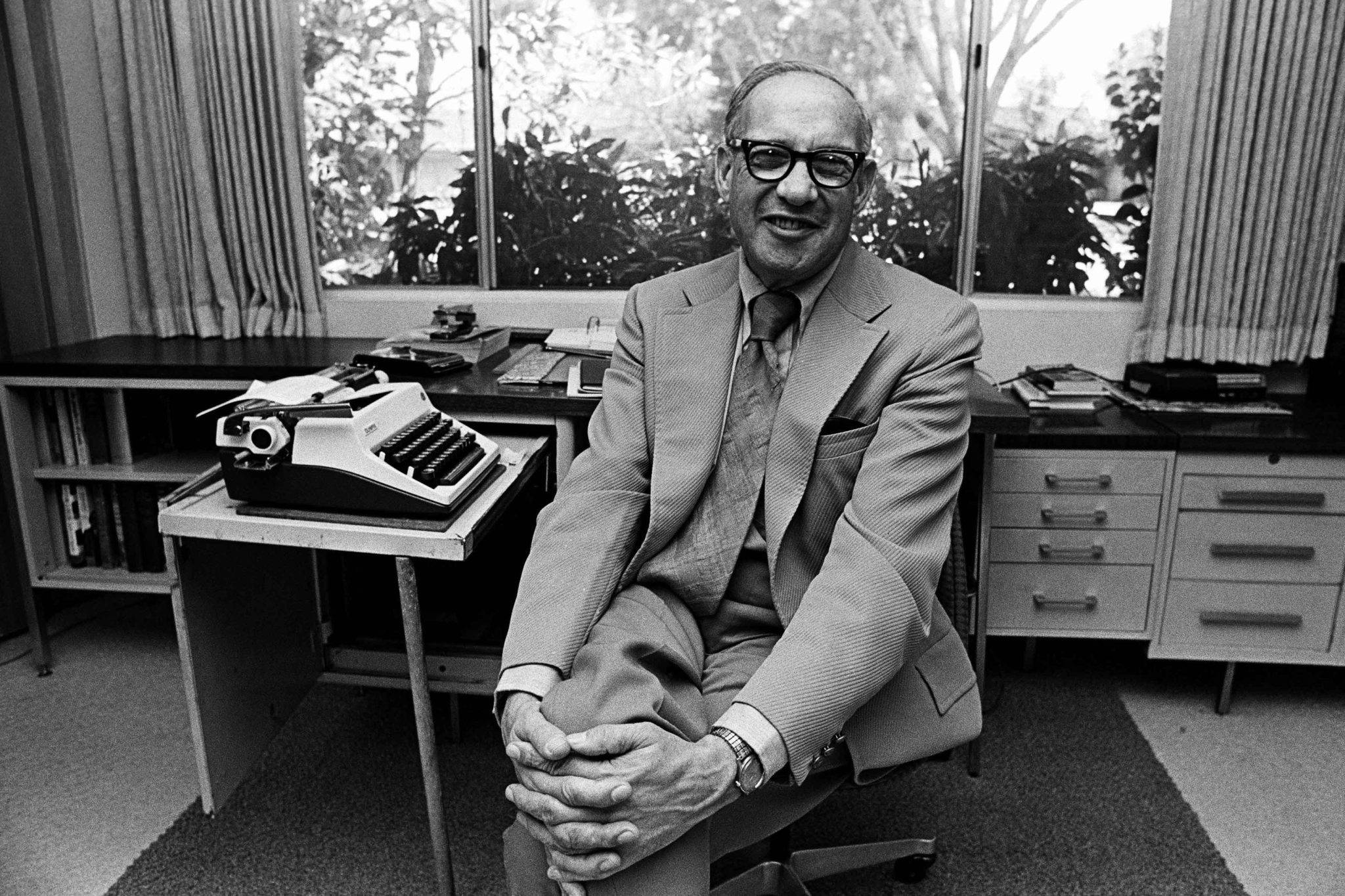
What would Peter Drucker, father of modern management, have to say about AI?

Business leaders, policy makers, and academics have the story of AI wrong. They fixate on what machines can do – like draft, code, analyze – when the real question is: now, what must humans do?
Peter Drucker, the father of modern management, answered that decades before algorithms entered our workplace: humans have a unique capacity to make judgements, take responsibility, and create purpose in their work. Those lessons are more urgent than ever, as AI takes over tasks but leaves us with the harder, more important work – deciding, judging, being accountable.
The urgency facing our workers is real. Federal Reserve Chair Jerome Powell recently noted that new graduates, younger workers, and minorities are struggling to find jobs right out of college. As AI rapidly automates many tasks students have trained for, they face a workforce that doesn’t know what role remains for them.
Drucker’s answer was simple but profound: organizations, and by extension societies, must give people dignity, roles and responsibility. Without them, he warned, we are reduced to “a mass of social atoms flying through space without aim or purpose.” AI only intensifies this risk.
The data underscores it. A 2023 Goldman Sachs study estimated that AI could automate one-fourth of all work tasks in the United States and Europe. Entry-level analysts, coders, and writers are already watching algorithms do much of what they trained for. In 2023, IBM made headlines by laying off a few hundred employees, mainly in HR, as part of an AI-driven streamlining effort.
There is still hope. As Drucker said, effectiveness is not intelligence alone, but the ability to convert intelligence into responsible action. Businesses are starting to realize this. As an MIT research study shows, when human-AI teams lack clear accountability, they often underperform the best human as well as the best machine alone. In fact, even IBM has rehired more employees than it originally laid off — with those hires coming in areas of the business that require “critical thinking,” according to the company’s CEO.
Three essential duties
So what can we do to create this future-ready workforce? Drucker taught that every institution has three essential duties: to define its purpose, to make people productive, and to take responsibility for its role in society.
First, is to establish purpose. Education must go beyond credentialing. Workers must be prepared with the tools to confront questions of purpose: What problem is this technology solving? Who does it serve? Who is accountable when it fails? Without this grounding, workers risk becoming technicians rather than responsible decision-makers.
Second, is to advance productivity. Drucker defined productivity not as doing more, but as enabling people to contribute meaningfully. AI should amplify human capability, not replace judgment. In healthcare, for example, AI should process vast data sets so clinicians can focus on patients. If we are to achieve the massive AI-driven productivity gains economists predict, we must be able to balance machine efficiency with human judgment and empathy.
Third, is to teach responsibility. Here, the university can rediscover its most important duty. Responsibility cannot be automated. Students must learn to own the consequences of their decisions. If an AI system denies a loan, misdiagnoses an illness, or spreads misinformation, accountability ultimately lies with people – not the algorithm.

Our institutions – businesses, universities, and society – stand at this crossroads. They can either perpetuate our current challenge, producing workers proficient in tools but unprepared for responsibility, or they can help create leaders who balance technical fluency with judgment, ethics, and purpose.
At the Drucker Institute, we call this vision a “functioning society,” one where business, government, and the social sector work together to enable humans to thrive in any environment. In such a society, effective management is not just a technical skill, it becomes a moral imperative. AI makes Drucker’s insight more urgent: our future doesn’t depend on how well the next iteration of an AI product performs; it depends on how well our next generation of workers can responsibly lead.
The opinions expressed in Fortune.com commentary pieces are solely the views of their authors and do not necessarily reflect the opinions and beliefs of Fortune.