News
‘Couldn’t pronounce Nvidia’ until 8 months ago


Legendary investor Peter Lynch built a reputation for routinely beating the market while overseeing Fidelity Magellan Fund in the 1980s. Decades later, he has some advice for the next generation of investors.
The artificial intelligence boom has dominated the market for the past three years, but Lynch, who averaged a 29.2% annual return in his 13 years at the helm of Magellan until 1990, has been happy to watch from the sidelines.
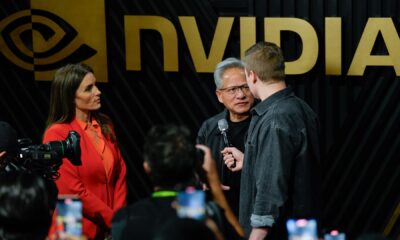
“I have zero AI stocks,” Lynch said on “The Compound and Friends” podcast with investor Josh Brown . “I literally couldn’t pronounce Nvidia until about eight months ago.”
Lynch, who famously claimed that at one time 1 out of every 100 Americans had a stake in Fidelity Magellan, on the podcast addressed his career, the lessons he’s learned along the way and, yes, today’s craze for everything tied to artificial intelligence. Here are five of the biggest takeaways:
Sitting out AI
Megacap tech stocks have skyrocketed since the introduction of ChatGPT in late 2022, leading many on Wall Street to question if the AI trade is reminiscent of the dot-com bubble in the late 1990s. Asked if investors have chased the AI trade too far, Lynch said he had “no idea.”
Lynch said he doesn’t understand technology enough to have an informed opinion on the market’s optimism toward AI.
“I’m the lowest tech guy ever,” he said. “I can’t do anything with computers. I just have yellow pads.”
Lynch declined to discuss his current portfolio or the stocks he likes at the moment, citing rules from Fidelity.
Why you don’t ‘play the market’
Lynch has long advocated that investors have a deep understanding of the companies they invest in. It’s a core tenet of his book “One Up on Wall Street.”

“I have this expression: ‘Know what you own,”’ Lynch said. “If you don’t understand what you own, you’re toast.”
Lynch said people will spend hours researching flights to ensure they get the best price. But when it comes to investing, he said “they’ll put $10,000 in some crazy stock they heard on the bus.”
He described the phrase “play the market” as “awful” and “dangerous.” Instead, Lynch said people should buy good companies and have an awareness of what they do.
Lynch said that the average variation in a typical New York Stock Exchange security in any given year is 100%, so investors need to know what to do when big moves happen.
Entering after the first inning
While the conventional wisdom is to buy stocks before they take off, Lynch cautioned against scorning all investment ideas just because a security has already rallied.
“Sometimes, you don’t have to be in the first inning,” Lynch said.
As an example, Lynch pointed to McDonald’s, which he was told long ago had already seen rapid domestic growth. The hamburger chain went on to see strong growth when it expanded internationally.
“People said ‘McDonald’s is done,’” Lynch said. “They just simply didn’t think it through.”
Investment advantages today
Today’s investors have “cushions” that didn’t exist before the Great Depression and the New Deal, according to Lynch.
Lynch named unemployment insurance, Social Security benefits and the creation of the Securities and Exchange Commission helping everyday people over time. He also highlighted the active role of the Federal Reserve in recent decades.
Investors today benefit from “so many things that are better,” Lynch said, noting more market and economic “buffers” than existed in the past.
Lynch said investors have frequently braced for an economic collapse on the order of the 1930s. But none of the market tests since then, even the Global Financial Crisis in 2008-2009, have had the same downward intensity.
“We had many opportunities to have a ‘big one,’” Lynch said. “We’ve had some probably bad presidents, some bad congresses, we’ve had bad economists, and we’ve made it through.”
Future of work
Lynch reassured workers who wonder if they will lose their jobs to AI.
In the early 1980s,about one million people worked for AT&T alone at a time when the entire labor force stood at about 100 million. Even as the telecom sector has grown, Lynch said the leading companies today employ about 400,000 workers.
Today, the U.S. workforce itself has swelled past 160 million jobs. Americans can probably count on expansion in some sectors to help offset elimination tied to technological advances or automation in others.
Lynch’s comments come as executives at companies ranging from Walmart to Accenture have warned that artificial intelligence will drastically reshape their workforces.
“It’s a great country. We’re creative,” Lynch said. “America creates, China duplicates, and Europe legislates.”
(Follow Josh Brown’s take on the best stocks in the market right now, including his investment outlook and where he sees opportunities next.)
(Learn the best 2026 strategies from inside the NYSE with Josh Brown and others at CNBC PRO Live. Tickets and info here.)